Maine Conservation Corps Helps Protect Our Watersheds
A week of teamwork, stewardship, and invasive species management around Adams Pond and Knickerbocker Lake.
Protecting drinking water starts long before it reaches the tap.
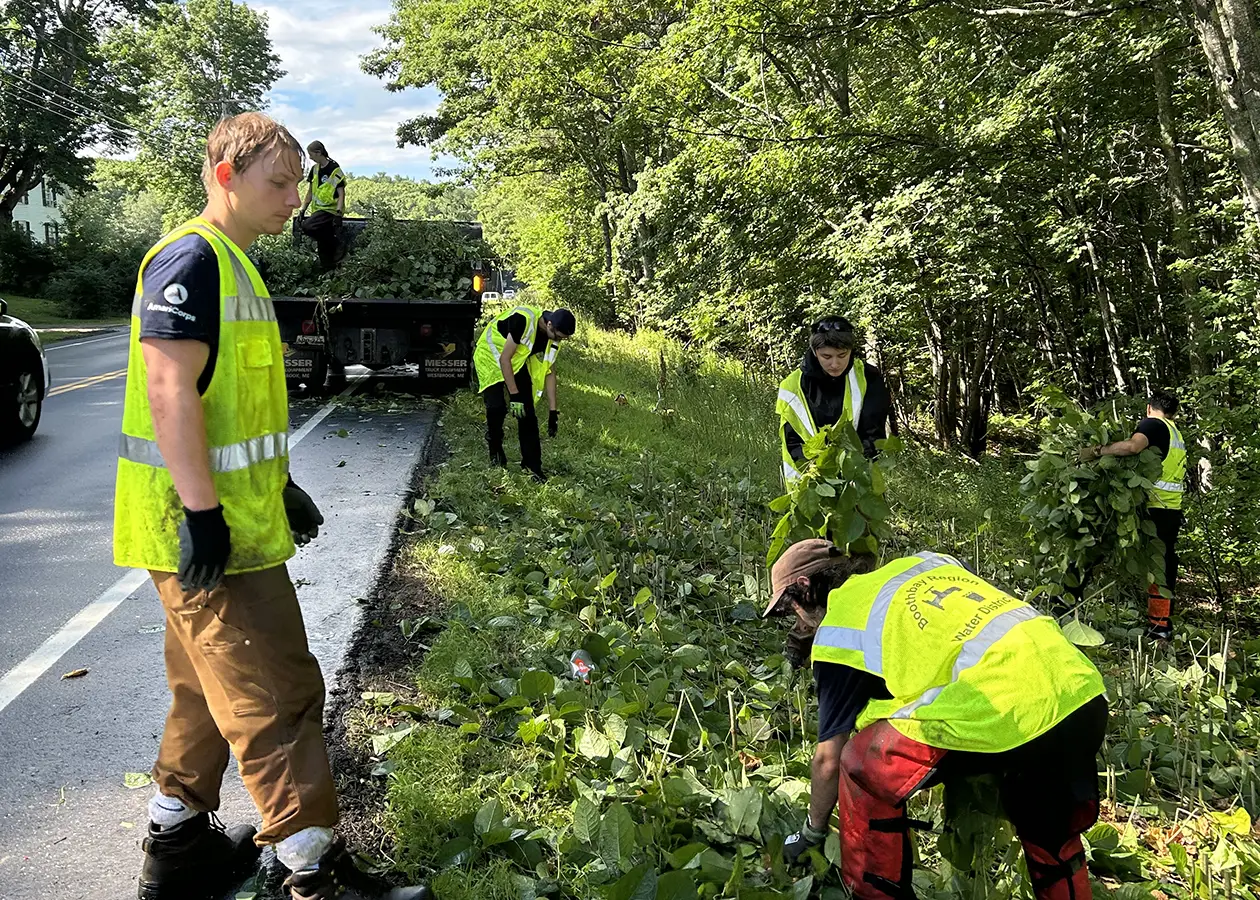
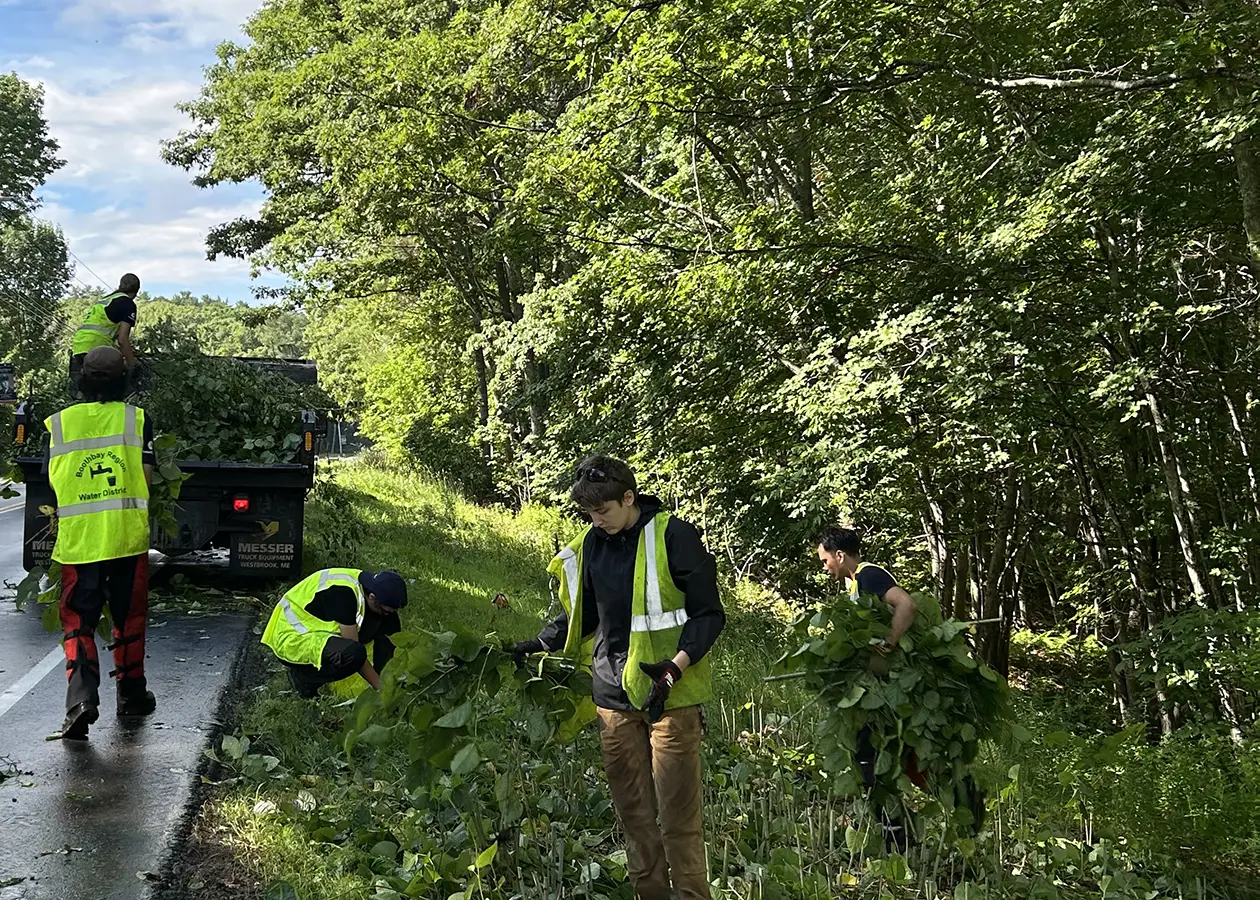
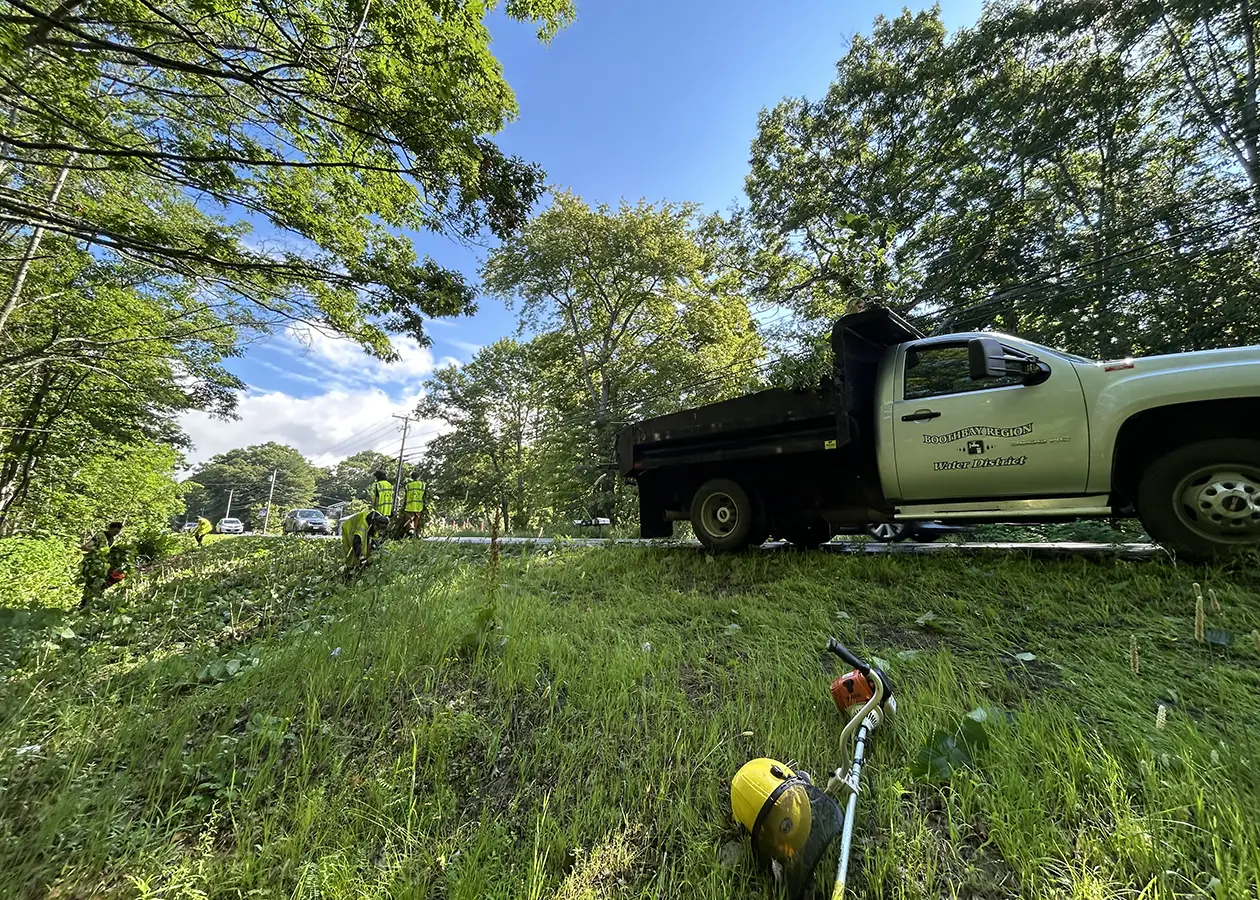
During the week of July 6–10, the Boothbay Region Water District welcomed a crew from the Maine Conservation Corps (MCC), along with BRWD summer intern Finn Hjerppe, to help reduce the spread of invasive terrestrial plants throughout the Adams Pond and Knickerbocker Lake watersheds.
Together, the team removed invasive species from several locations, including Route 27, Clifford Playground, the Knickerbocker Lake Public Access, and BRWD property surrounding Adams Pond. Their work focused on plant species such as Japanese knotweed, shrubby honeysuckle, multiflora rose, and bittersweet nightshade.
Why This Work Is So Important
While these plants may seem harmless at first glance, invasive species crowd out native vegetation, reduce biodiversity, and can contribute to shoreline erosion.
Japanese knotweed, in particular, is known to destabilize streambanks and shorelines, allowing more sediment to enter nearby waterways and impact water quality.
We're incredibly grateful...
… to the Maine Conservation Corps crew for donating their time and energy to this important work, and to our summer intern, Finn Hjerppe, for once again helping protect the natural resources that provide clean drinking water for our community.
Working Together for Clean Water
As part of the project, we’d also like to thank our Boothbay Region Clean Drinking Water Initiative partner, Coastal Maine Botanical Gardens, for generously providing complimentary admission tickets for the Maine Conservation Corps crew.
We hope they enjoyed exploring one of the region’s most beautiful natural treasures after a week of hard work!
Protecting water starts with protecting the land.
Managing invasive plants is one of the many ways BRWD works year-round to safeguard the watersheds that supply drinking water to Boothbay, Boothbay Harbor, and Southport.
Why Remove Invasive Plants?
Invasive species can:
- Crowd out native plants
- Reduce wildlife habitat
- Increase shoreline erosion
- Impact water quality
Removing invasive plants helps keep our watersheds healthy and our drinking water protected.